
Lug Nut Torque Guide: A Comprehensive Overview (Updated 02/07/2026)
Maintaining correct wheel torque is crucial for vehicle safety, requiring clean surfaces and adherence to specified torque values for optimal performance.
Lug nut torque refers to the amount of force applied to tighten the wheel’s lug nuts, securing the wheel to the vehicle’s hub. Proper torque is paramount; it’s not simply about tightening them as much as possible. Under-torquing can lead to wheel detachment, a severe safety hazard, while over-torquing can damage wheel studs, rotors, or even the wheel itself.
Achieving the correct torque ensures a firm, even clamping force, maintaining wheel stability during driving. Vehicle manufacturers specify precise torque values, considering factors like wheel material, size, and lug nut style. Consulting your owner’s manual or reliable torque specification charts is essential for safe and effective wheel installation.
Why Proper Torque Matters

Incorrect lug nut torque directly impacts vehicle safety and component longevity. Insufficient torque allows wheels to loosen while driving, potentially leading to catastrophic wheel separation and loss of control. Conversely, excessive torque can stretch and weaken wheel studs, increasing the risk of breakage and causing damage to brake rotors due to warping.
Maintaining the manufacturer’s specified torque ensures even pressure distribution, preventing vibrations and stress fractures. Proper torque also facilitates easier wheel removal during maintenance or emergencies. Prioritizing correct torque is a fundamental aspect of responsible vehicle ownership and maintenance.
Understanding Torque Specifications
Torque specifications, measured in foot-pounds (ft-lbs), represent the precise amount of rotational force needed to tighten lug nuts securely. These values aren’t arbitrary; manufacturers determine them based on wheel and hub design, material composition, and clamping force requirements.
Vehicle owner’s manuals are the primary source for correct specifications. Charts from reputable suppliers like Webb Wheel Products offer guidance for trucks and trailers. Ignoring these specifications can lead to wheel damage, stud failure, or, most critically, wheel detachment. Always verify the correct torque for your specific vehicle.
Factors Influencing Torque Requirements
Several key factors dictate appropriate lug nut torque. Wheel material – steel versus alloy – impacts the necessary clamping force. Larger and wider wheels generally require higher torque values to ensure secure mounting.
Lug nut style, such as coned or ball seat designs, also plays a role. Furthermore, aftermarket wheel installations or the use of wheel spacers necessitate re-evaluation of torque specifications, potentially requiring adjustments from factory settings to maintain safety and prevent wheel issues.
Wheel Material (Steel vs. Alloy)
Steel wheels, traditionally more common, generally require lower torque specifications compared to alloy wheels. This difference stems from steel’s greater malleability and ability to conform to mounting surfaces. Alloy wheels, often lighter and stronger, demand higher torque to achieve the same level of clamping force.
Using incorrect torque for the wheel material can lead to loosening or, conversely, damage to the wheel studs or the wheel itself. Always consult the vehicle’s manual or a reliable torque chart.
Wheel Size and Type
Larger diameter wheels and those with wider profiles often necessitate higher torque specifications. This is because of the increased forces acting upon the wheel mounting surface during vehicle operation. Different wheel types, such as those used for off-roading or performance applications, may also have unique torque requirements.
Always verify the correct torque setting based on the specific wheel size and type installed on your vehicle, referencing the owner’s manual or a trusted torque chart.
Lug Nut Style (Coned, Ball Seat, etc.)
The style of lug nut – whether coned, ball seat, or another design – directly impacts the required torque. Different seat types distribute clamping force differently, influencing the necessary tightness for a secure connection. Using the incorrect lug nut style for your wheel can lead to loosening or damage.
Ensure compatibility between the lug nut style and the wheel’s lug seat. Refer to vehicle specifications or consult a professional to confirm the correct type and torque setting.
Common Torque Specifications by Vehicle Type
Torque specifications vary significantly based on vehicle type. Passenger cars and light trucks generally require between 80-100 ft-lbs, while heavier duty trucks and trailers often demand 120-140 ft-lbs, and sometimes even higher.
Always prioritize the vehicle owner’s manual for precise values. Utilizing incorrect torque can compromise wheel security. Remember that wheel size and material also influence these figures, necessitating careful attention to detail.
Passenger Cars & Light Trucks
For most passenger cars and light trucks, a common lug nut torque specification falls within the 80 to 100 ft-lbs range. However, this is a generalization; specific values depend on the vehicle’s make, model, and wheel type.
Vehicles with alloy wheels may have different requirements than those with steel wheels. Always consult the owner’s manual or a reliable torque chart to ensure proper tightening, preventing wheel detachment or stud damage.
Heavy Duty Trucks & Trailers
Heavy-duty trucks and trailers necessitate significantly higher torque specifications, typically ranging from 150 to 500 ft-lbs, depending on the wheel’s size and stud count. Webb Wheel Products provides valuable charts detailing recommended torque for various truck and trailer wheel ends.
Maintaining correct torque is paramount for these vehicles due to the substantial loads they carry. Incorrect torque can lead to wheel failure, posing a serious safety risk. Regular checks and re-torquing are essential.
Torque Specification Charts & Resources
Accessing reliable torque specifications is vital for proper wheel installation. Webb Wheel Products offers comprehensive wall charts identifying correct torque for truck and trailer wheel ends, covering both 6-stud and 10-stud configurations.
Furthermore, your vehicle owner’s manual remains the definitive source for factory-recommended torque values. Utilizing these resources ensures accurate tightening, preventing potential wheel detachment or damage. Always consult multiple sources for verification.
Webb Wheel Products Charts
Webb Wheel Products provides readily available wall charts detailing proper torque specifications for various truck and trailer wheel end applications. These charts specifically cover hubs, spoke wheels, drum assemblies, and rotor configurations.
The resources delineate recommended specifications for both 6-stud and 10-stud wheel patterns, ensuring technicians and owners have a clear guide for secure wheel fastening. These charts are a valuable tool for maintaining safe and reliable operation.
Vehicle Owner’s Manuals
Your vehicle’s owner’s manual is the definitive source for recommended lug nut torque specifications, especially for stock vehicles. It provides precise values tailored to your specific make and model, ensuring optimal wheel fastening.
However, if you’ve made any modifications, such as upgrading your wheels or using spacers, the manual’s specifications may no longer be accurate. Always verify torque requirements after any wheel alterations.
Tools for Accurate Torque Application
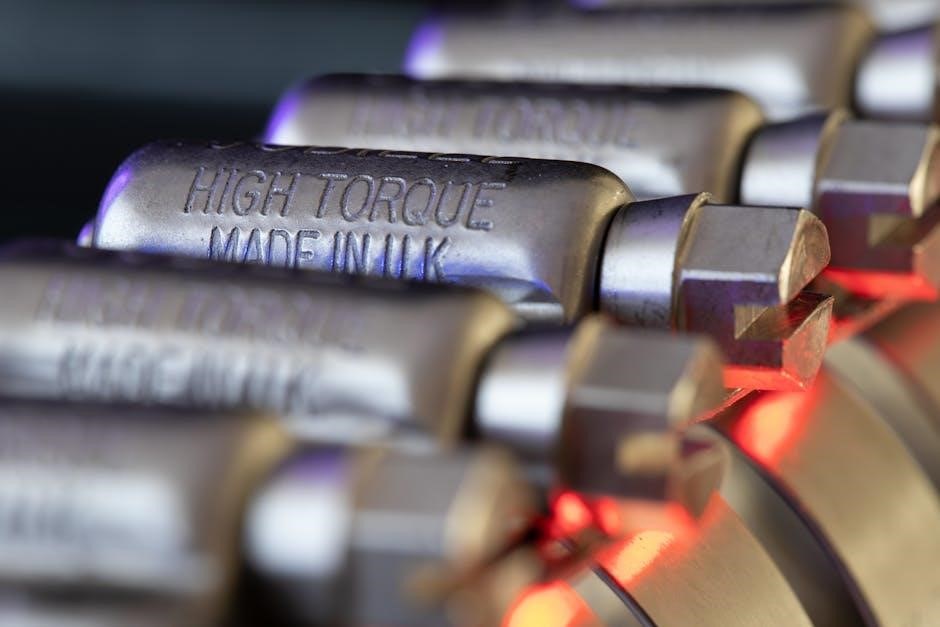
Achieving accurate torque requires the right tools. Torque wrenches, available in clicker and digital varieties, are essential for precise tightening. Clicker wrenches signal when the desired torque is reached, while digital wrenches offer greater accuracy and often feature adjustable settings.
Torque sticks can also be used, but they are generally less precise than torque wrenches. Regardless of the tool, calibration is key to ensure reliable results and prevent over or under-tightening.
Torque Wrenches (Clicker, Digital)
Clicker torque wrenches are popular due to their affordability and simplicity; they produce an audible “click” when the set torque is achieved. Digital torque wrenches offer enhanced precision, displaying torque values on a screen and often allowing for multiple units of measurement.
Digital models frequently include features like peak torque readings and audible alerts. Proper storage and occasional calibration are vital for maintaining the accuracy of both clicker and digital torque wrenches.
Torque Sticks
Torque sticks are extensions placed between a ratchet and the lug nut, designed to limit torque application. They function by bending when a pre-set torque is reached, preventing over-tightening. While convenient for speed, torque sticks are less precise than torque wrenches.
Their accuracy can be affected by factors like wear and tear, and they are best suited for quick installations where absolute precision isn’t critical. Calibration is not typically possible with torque sticks.

Step-by-Step Torqueing Procedure
Begin by cleaning the wheel mounting surfaces and lug nuts thoroughly. Hand-tighten each lug nut in a star pattern to ensure even pressure. Using a calibrated torque wrench, apply torque in three stages: half, then two-thirds, and finally, the full specified torque, again in a star pattern.
This multi-stage approach promotes uniform clamping force. Always consult your vehicle’s manual for the correct torque specification.
Cleaning Wheel Mounting Surfaces
Before torqueing, meticulously clean both the wheel mounting surface on the hub and the mating surface on the wheel itself. Remove any rust, dirt, corrosion, or debris using a wire brush or appropriate cleaning solution.
These contaminants can create an uneven surface, leading to inaccurate torque readings and potential loosening. A clean surface ensures proper contact and consistent clamping force, vital for wheel security.
Star Pattern Torqueing
Employing a star pattern, or criss-cross sequence, when tightening lug nuts is paramount. This method ensures even pressure distribution across the wheel, preventing warping or rotor distortion.
Begin with hand-tightening all lug nuts, then torque them in a star pattern – moving to the nut directly opposite the last one tightened. Repeat this process until the final torque specification is achieved, guaranteeing a secure and balanced wheel mounting.
Potential Problems from Incorrect Torque
Incorrect lug nut torque presents significant safety risks. Under-torqued nuts can lead to wheel detachment while driving, a catastrophic failure. Conversely, over-torquing stretches and weakens the studs and nuts, potentially causing them to break, also resulting in wheel separation.
Both scenarios compromise vehicle stability and control, increasing the likelihood of accidents. Regular checks and adherence to specified torque values are vital for preventing these dangerous outcomes.
Under-Torqued Lug Nuts
Under-torqued lug nuts represent a serious safety hazard, allowing the wheel to loosen over time. This gradual loosening creates play between the wheel and the hub, leading to vibrations and uneven wear on braking components.
Ultimately, insufficient torque can result in complete wheel detachment while the vehicle is in motion. This poses a significant risk of loss of control and a potentially devastating accident. Consistent re-torqueing is essential.
Over-Torqued Lug Nuts

While seemingly safer, over-torquing lug nuts also presents considerable risks. Excessive force can stretch and weaken the lug studs or bolts, compromising their structural integrity. This can lead to stud failure, particularly under stress from driving conditions.
Furthermore, over-torquing can warp the brake rotors, causing uneven braking and reduced stopping power. It also makes future lug nut removal significantly more difficult, potentially damaging tools or the nuts themselves.
Checking and Re-Torquing Lug Nuts
After initial wheel installation, a re-torque procedure is essential. Lug nuts can settle as the vehicle’s weight compresses the wheel mounting surfaces. It’s recommended to perform an initial torque check after 50-100 miles of driving.
This follow-up ensures all fasteners remain within the manufacturer’s specified torque range. Regular re-torquing, especially after tire rotations or wheel changes, maintains optimal wheel security and prevents potential issues related to loose or improperly tightened lug nuts.
Initial Torque & Follow-Up
When initially tightening lug nuts, apply torque in stages, gradually increasing to the final specification. This ensures even clamping force across the wheel. Following this initial tightening, a crucial re-torque step is necessary.
After driving a short distance – typically 50 to 100 miles – re-check and re-torque the lug nuts. This accounts for any settling that may occur as the wheel mates fully with the hub, guaranteeing continued safety and preventing loosening.
Frequency of Re-Torquing
Beyond the initial follow-up, periodic re-torquing is recommended, especially after wheel removal or significant driving conditions. A good practice is to check lug nut torque every 3,000 to 5,000 miles, or before and after long trips.
Vehicles subjected to heavy loads, off-road driving, or track use should have more frequent checks. Always re-torque after any suspension work or tire changes to maintain optimal wheel security and prevent potential hazards.
Lug Nut and Bolt Maintenance
Regular maintenance of lug nuts and bolts is vital for continued safety. Cleaning lug nuts at the wheel mounting surface interface prevents corrosion and ensures accurate torque readings. Inspect them frequently for signs of damage, such as stripped threads or rounded edges.
Replace any damaged lug nuts or bolts immediately. Consider applying a light coat of anti-seize compound to the threads (avoiding the seating surface) to prevent future corrosion and facilitate removal.
Cleaning Lug Nuts
Thoroughly cleaning lug nuts is a critical step before torqueing wheels. Accumulated dirt, rust, and debris at the interface between the lug nut and wheel surface can create inaccurate torque readings. Use a wire brush to remove loose debris, followed by a solvent to dissolve stubborn grime.
Ensure the wheel mounting surfaces are also clean. A clean connection guarantees proper clamping force and prevents uneven stress distribution, contributing to wheel security.
Inspecting for Damage
Regularly inspect lug nuts and bolts for any signs of damage, such as stripped threads, rounded heads, or cracks. Damaged hardware compromises wheel security and must be replaced immediately. Check for elongation in bolts, indicating they’ve been stretched beyond their yield strength.

Also, examine the wheel studs for corrosion or damage. Ignoring these issues can lead to wheel detachment, posing a significant safety risk. Prioritize replacement for safe operation.
Impact of Wheel Upgrades on Torque
Aftermarket wheels often necessitate a re-evaluation of torque specifications. Stock torque values, found in the owner’s manual, may not be appropriate for upgraded wheels due to differing materials or designs. Always consult the wheel manufacturer for their recommended torque settings.

Using wheel spacers introduces further complexity, potentially requiring longer lug studs and adjusted torque. Incorrect torque with upgrades can lead to wheel failure or loosening, so diligence is key.

Aftermarket Wheels
When installing aftermarket wheels, relying solely on the vehicle’s owner manual for torque specifications is often insufficient. Different wheel materials, designs, and hub thicknesses can significantly alter the required torque. Always prioritize the wheel manufacturer’s recommendations for optimal safety and performance.
Verify compatibility and ensure proper fitment before installation. Ignoring these guidelines can lead to wheel detachment, posing a serious risk while driving.
Spacer Considerations
Utilizing wheel spacers introduces complexities to lug nut torque. Spacers alter the clamping force distribution, often necessitating a reduction in the standard torque specification. Consult both the spacer manufacturer and the wheel manufacturer for precise torque values.

Regularly inspect spacers for damage and ensure proper installation with appropriate lug bolts or extended studs. Failure to do so can compromise wheel security and lead to catastrophic failure.